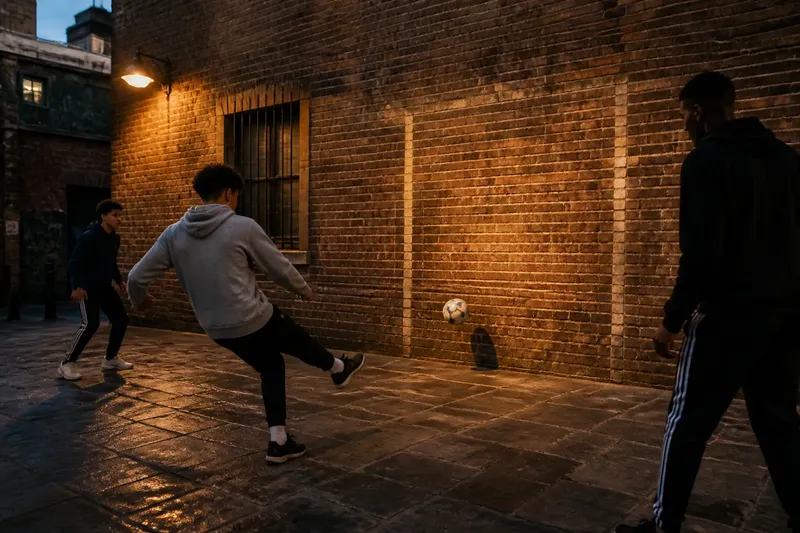
Cage Pitch or Open Park: Choosing a Place for a Kickabout
Cage pitch or open park? Choose a kickabout setting that fits your group’s preferred pace, passing style, and need for space, then adapt the game to suit.
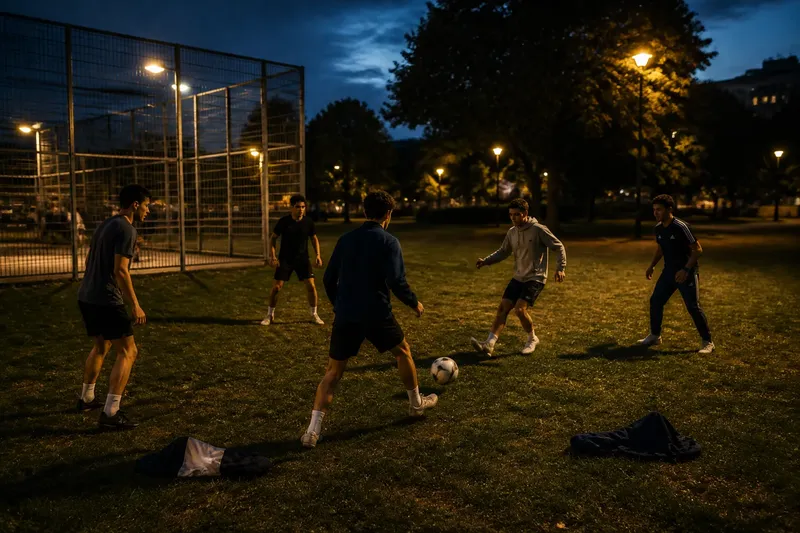
Your friends have a ball, a free afternoon, and two options: a fenced cage pitch with a small goal or a broad park lawn. Choosing a cage pitch or open park for a kickabout comes down to how you want the game to move, not simply how much grass is available.
A cage puts boundaries and nearby players into the action. An open park offers room to spread out, change the shape of the game, or keep play casual. Think about the kind of football your group wants before settling on a spot.
Choose a cage pitch for quick, close play
A cage pitch suits groups that enjoy short passing, quick turns, and frequent involvement. The enclosure keeps the ball near the action, so players spend less time retrieving it and more time making decisions under pressure. Walls or fences may also let the ball rebound into play, depending on the court’s design.
That tight format can make a small group’s game feel active, but it can also make every touch feel contested. If players have different confidence levels, agree to ease off hard challenges and share the ball before starting. A cage is most enjoyable when close play feels lively rather than intimidating.
Look for a court that is open for public use and suitable for football. A marked basketball court, for instance, may have rules or a layout that make football inappropriate. Check signs and posted facility guidance before setting up.
Choose an open park for flexible movement
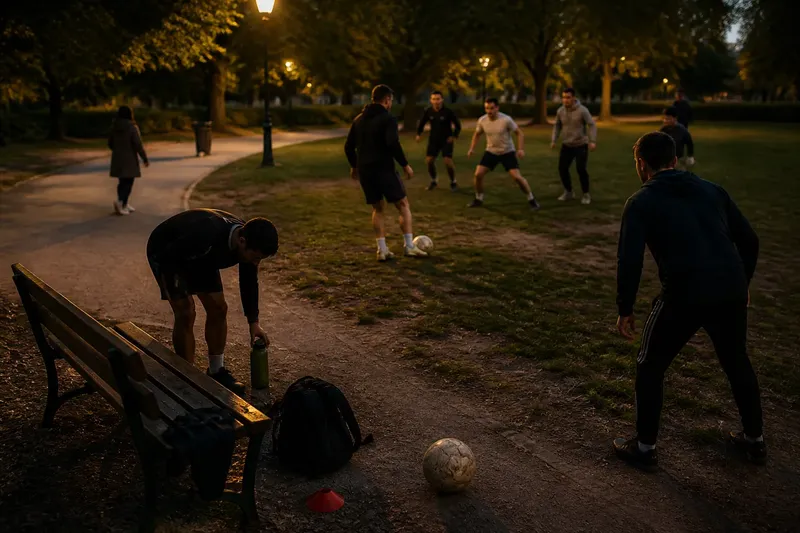
A park gives players more freedom to shape the session. You can make a passing game, practice longer balls, or spread into a broader formation. The open setting also makes it easier to adapt if attendance changes or someone wants to take a break.
That flexibility can loosen the rhythm. Players may drift far apart, and a small group may spend more time chasing the ball than passing it. Set an informal limit to the game area and bring the group closer if the action starts to feel disconnected.
Park surfaces and layouts vary. Grass may be uneven or soft, while a paved area can be hard underfoot; trees, slopes, and other park features may affect where a ball travels. Take a quick look at the intended playing ground and choose a style of play that fits what you see.
Match the space to your preferred style of football
Use the setting to support the game you actually want, rather than trying to force one format into every location.
- If your group wants rapid passing: Choose an available cage, then decide whether the fence is in play. If rebounds create confusion, treat the fence as out and restart with a kick-in.
- If players want long passes and runs: Choose a park area with room to move. If the group becomes too spread out, bring the players closer or narrow the playing area.
- If attendance is uncertain: Favor a park where the game can expand or contract. If the turnout stays small, shorten the passing distance rather than sending the ball across a large area.
- If the group includes cautious or newer players: Pick the setting where they can receive the ball without constant pressure. If a cage feels too intense, slow the pace or move to a more open space.
- If players want a focused session: A court can give the game a clear, compact shape. If it is occupied, use a suitable park area only if the group can recreate that close format comfortably.
- If people want room for different activities: A park can accommodate breaks or a second small game. If it is crowded, choose another location rather than letting play spread into busy areas.
Say five friends plan to practice passing and finishing, and an invented situation unfolds: they arrive to find the cage occupied while a suitable patch of park is available. They agree to use two jackets as goals, keep passes short, and take shots only toward the open end of the patch. When a strong kick sends the ball beyond their chosen area, they pause and bring the game closer. The result is a compact practice in the park, with less of the cage’s close pressure and more room to adjust; the tradeoff is that they must retrieve the ball and reset their makeshift goals themselves.
How do cage pitches and parks change the session?
Can you use the walls of a cage pitch?
That depends on the court’s rules and the group’s agreement. Check posted signs, then decide whether a rebound keeps play live or means a restart so everyone follows the same rule.
Does an open park work for a small group?
It can, especially if players keep their passing range short and choose a compact playing area. If the ball keeps traveling too far, tighten the game rather than trying to use all the available space.
Which setting is better for newer players?
Neither setting is automatically easier: a cage brings the ball into frequent contact, while a park gives players more room to move. Ask what feels comfortable, then adjust pace, pressure, and playing area to suit the group.
What can you do if the preferred spot is occupied?
Check whether another suitable area is available and permitted for play. If not, change the session’s plan or choose another location instead of assuming an occupied court or lawn can be taken over.
Make a simple decision before you leave
Ask each player whether they want close passing, longer runs, or a flexible session. Then check which setting is available, permitted, and suited to that preference. If the answers conflict, agree on a fallback: try the first suitable space, then change the format or location if the game does not fit.
The choice between a cage pitch or open park matters most when it changes how players participate. A court can concentrate the action; a park can let the game breathe. Pick the setting that suits your group’s intended rhythm, and let the space—not habit—shape the next pass.